
-
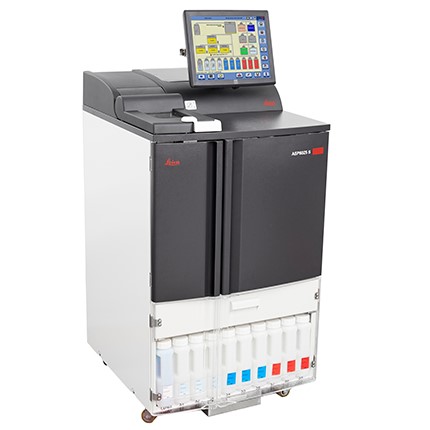 The New ASP6025 S is designed to improve your lab’s performance with quality-driven technology that optimizes tissue processing performance and supports rapid processing. Designed for increased performance and reliability, the new ASP6025 S processes up to 300 cassettes simultaneously for faster turnaround times.
 -
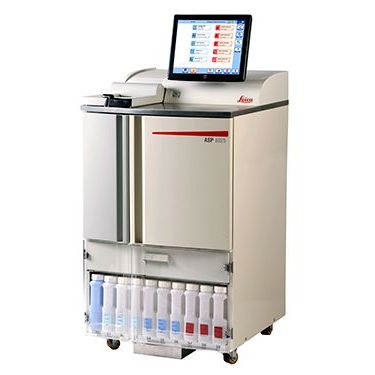 Focus on what’s critical: Quality, specimen safety, productivity. The ASP6025 supports diagnostic clarity thanks to an optimized reagent management system and validated processing protocols. Built-in safety features and reagent quality control deliver specimen protection and accurate processing results.
 -
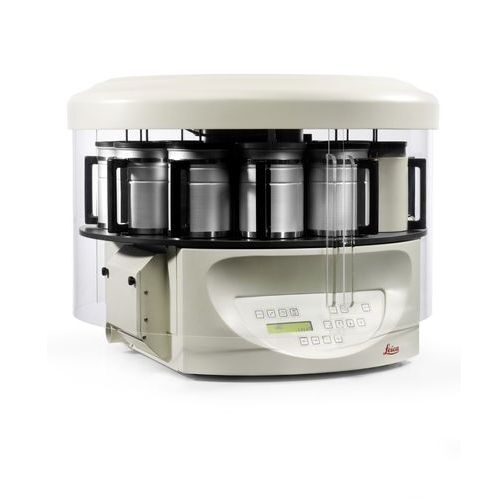 The Leica TP1020 tissue processor is available in four configurations: the basic instrument, the basic instrument with vacuum, the basic instrument with a fume control system and the basic instrument with both vacuum and fume control. Gentle specimen processing and a high level of specimen safety at all stages of the processing run are supported by the robust design based on precision mechanics in conjunction with a modern user interface.
 -
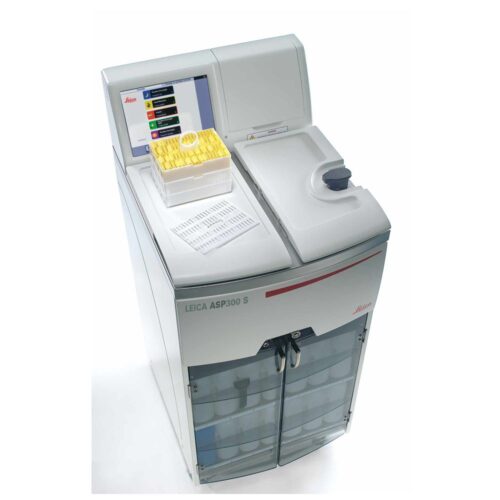 Designed for routine and research histopathology of up to 300 cassettes. Proven technology combined with top quality components. Optional RemoteCare diagnostic provide superior instrument reliability. Simplify user operations with an intuitive user interface, color touch screen and a variety of "smart" features. Improve specimen quality and laboratory economy with the Reagent Management System and quick start for commonly used programs.
 -
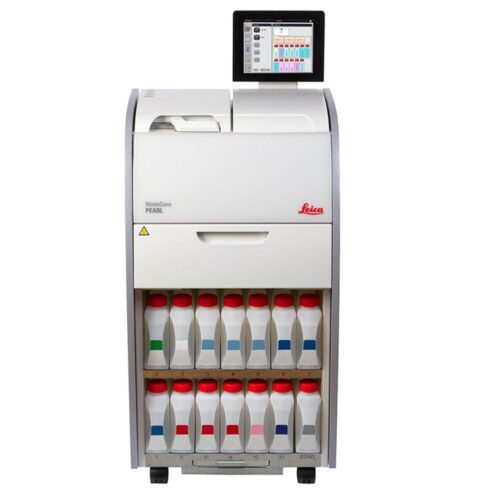 HistoCore PEARL is a compact instrument with a small footprint to maximize your laboratory space. It also provides the essential features needed for added safety, efficient tissue processing and optimized workflows.
 -
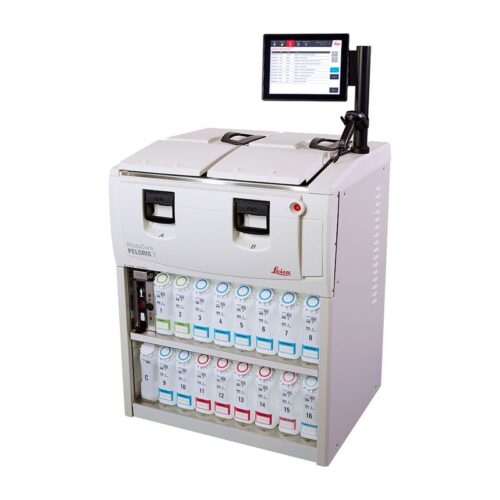 Build your future with HistoCore PELORIS 3. Meet today's workflow demands and build your lab's capacity for the future. With a HistoCore PELORIS 3 tissue processor, feel confident with Track and Trace features designed to maximize productivity for efficient and flexible workflow, while maintaining quality.
 -
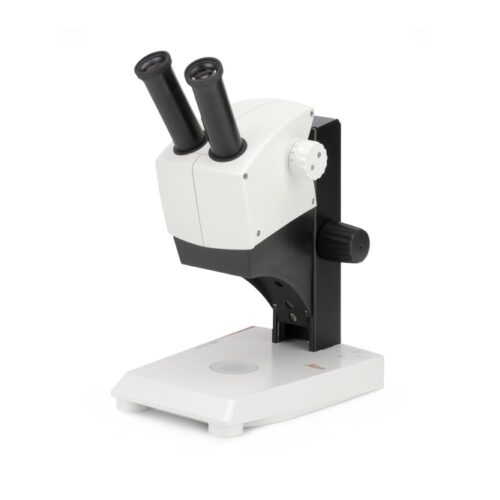 The Leica EZ4 educational stereomicroscope with 4.4:1 zoom for entry level university and college courses such as biology, anatomy and chemistry provides over 20 years of bright LED illumination which saves time and cost of replacement bulbs.
 -
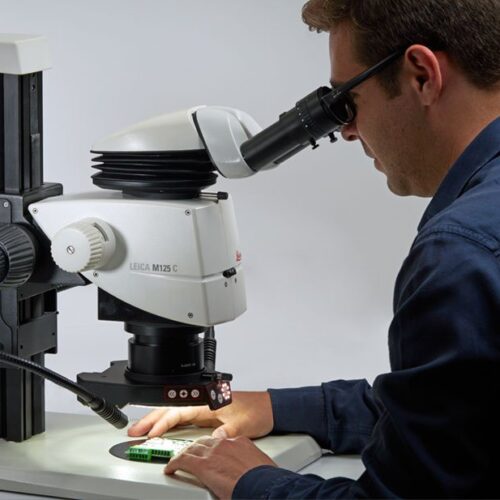 With a Leica M-series stereo microscope you can choose from a comprehensive range of accessories to adapt your microscope to your application, whether it is in materials testing, life science research or forensic application.
 -
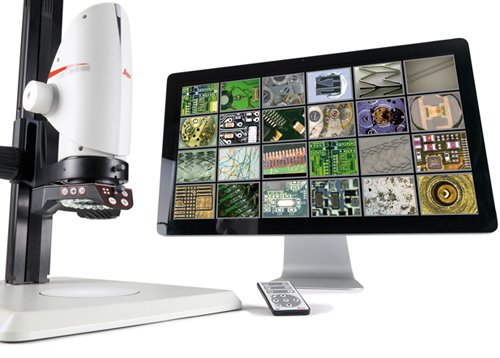 Digital microscope system for digital inspection, observation and measurement. From tiniest detail to an overview, the optics ensures magnification of up to 300x. The built-in HDMI microscope camera provides full high definition live images of up to 30fps and a resolution of 5Mpixels.
 -
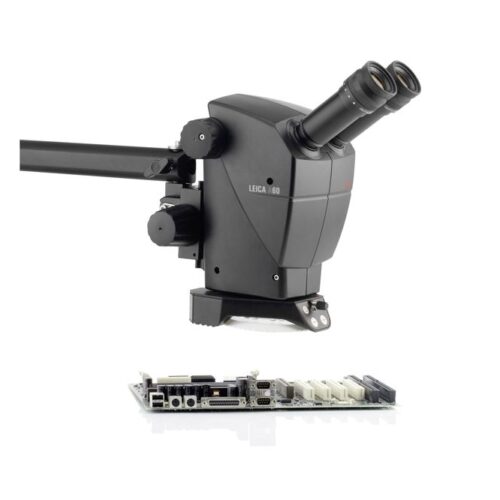 The intuitive A60 F and A60 S stereo microscopes fulfill what you need – high sample throughput, optimum visibility of product details and components, and easy processing of subassemblies. The Leica A60 stereomicroscope does not require the user to be a microscope expert. The components of the preconfigured system are perfectly matched to each other to provide easy operation with the best optical results. Choose between two different stands: the Leica A60 F with flex arm for maximum freedom of movement or the Leica A60 S with swing arm for high stability.
 -
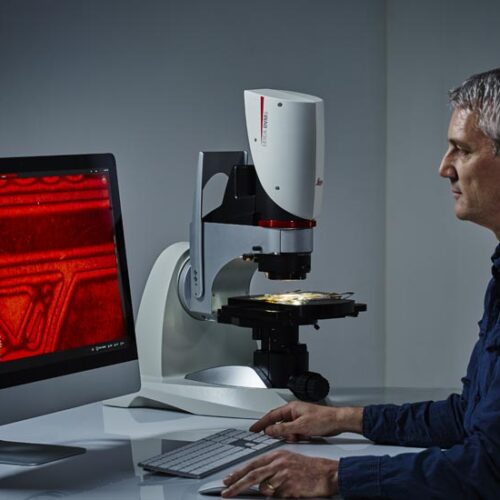 With the DVM6, you can get from the big picture to smallest details in an instant. You can seamlessly carry on working even if changing objective is required, as the sample always stays in focus and no pre-adjustments are needed. With the tilting function you can observe your sample from different angles from up to ±60° With the DVM6, you can get from the big picture to smallest details in an instant. You can seamlessly carry on working even if changing objective is required, as the sample always stays in focus and no pre-adjustments are needed. With the tilting function you can observe your sample from different angles from up to ±60°.
 -
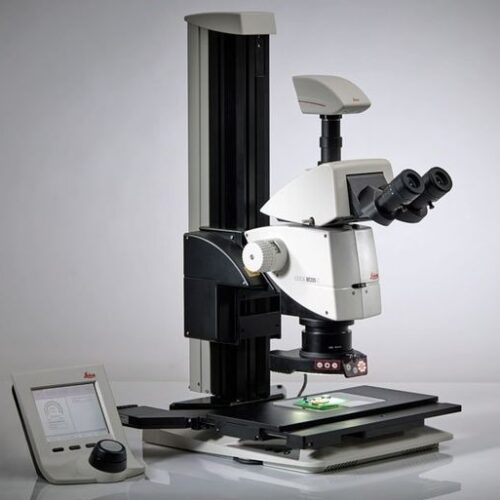 The Leica M205 C, the world’s first stereomicroscope to offer 20.5:1 zoom, uses unique FusionOptics™ technology to provide exceptional image detail and impressive 3D depth perception. Its rigid, sturdy mechanical structure, revolutionary FusionOptics™, and completely integrated multi-contrast illumination, make the M205 C an ideal instrument for questioned document examiners seeking a high-performance microscope capable of revealing fine details.
 -
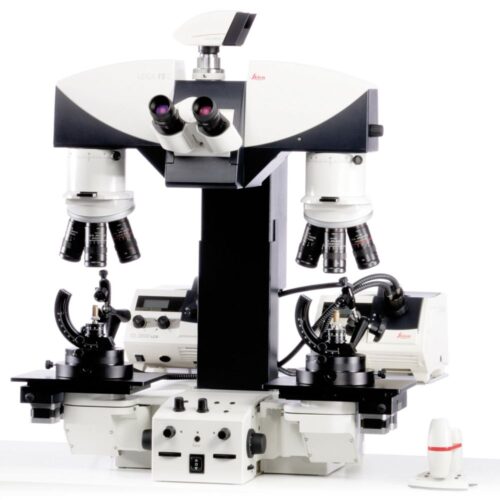 Leica FS C motorized comparison macroscope is used for a wide range of forensic investigations including ballistics, toolmark, and document comparison. Intelligent Automation combines with outstanding ergonomic design.
 -
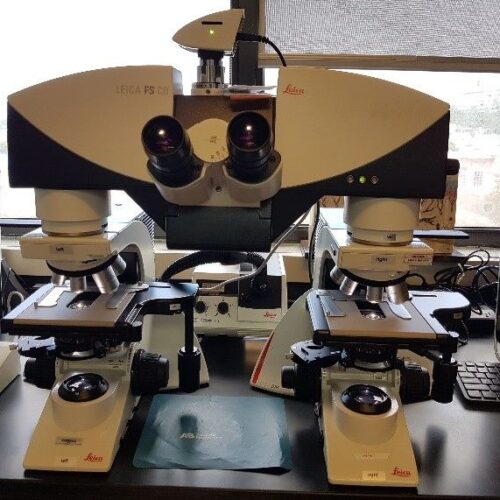 The Leica FS 2500 TL features two Leica DM2500 or DM2700P microscopes with transmitted light illumination under the motorized comparison bridge Leica FSCB. The Leica FS 2500 TL enables high precision comparison of two objects at magnifications up to 1000x, in transmitted light brightfield, transmitted polarized light and transmitted light phase contrast, supplying reliable evidence of the tiniest differences in their microstructure, texture and color.
 -
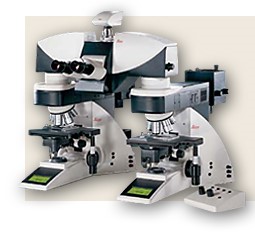 The Leica DM4 B complements perfectly the micro comparison bridge. Its fully automatic light management, integrated Variolux color module, selected optics pairs and reproducible illumination ensure you the greatest possible comparison reliability. Contrast methods are available at the touch of a button, while the microscope parameters are automatically stored by the software. The results are thus reproducible at any time.
 -
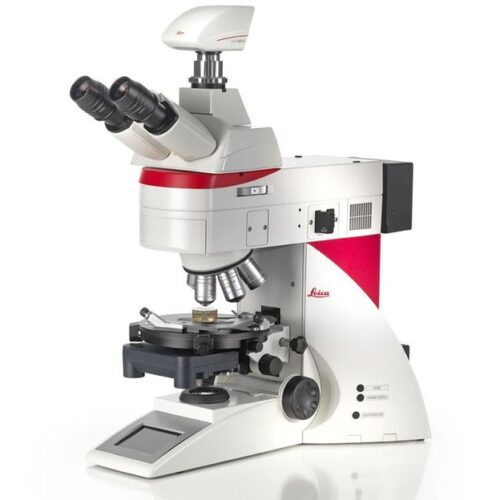 Fully coded and semi-automated. The Leica DM4 P automatically detects which contrast method and objective are being used. This provides valuable consistency and reproducibility for your research. Manual diaphragm setting is no longer required, either in the transmitted light or incident light method. Light intensity automatically adjusts to the objective. Image brightness remains constant when switching objectives, which eliminates glare.
 -
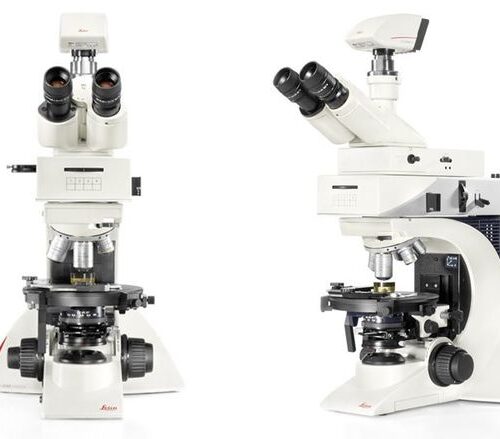 The Leica DM2700 P offers a level of reproducibility that is one-of-a-kind in its class, the built-in focus stop protects your samples and the front lens of the objective. For samples of equal height, the focus stop makes the focusing plane easier to reconstruct so you can concentrate entirely on your application. Color-coded lenses match the color-coded field and aperture diaphragm adjustment (CDA), to ensure that the illumination conditions are always matched to the objective. Constant color temperature by advanced LED technology.
 -
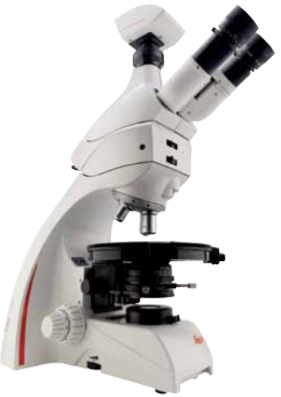 The Leica DM750 P is the ideal polarizing microscope for university and other instructional use, offering a standard and an advanced Bertrand lens module for unsurpassed ease of operation. The Leica DM750 P is the ideal polarizing microscope for university and other instructional use, offering a standard and an advanced Bertrand lens module for unsurpassed ease of operation.
 -
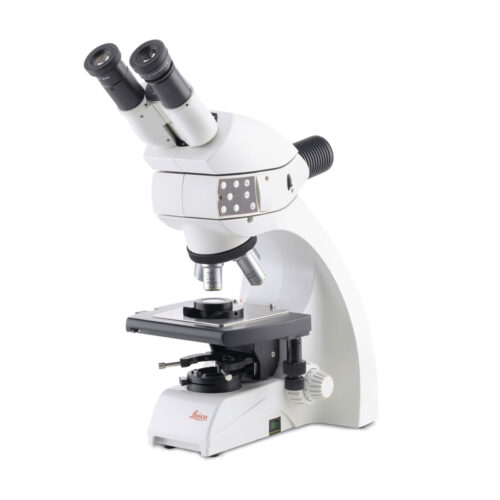 The Leica DM750 M is the ideal microscope for basic materials applications in an Industrial Lab or Material Science course. It can be equipped with various specimen holders to accommodate mounted specimens of different diameters. The unique Reflected light LED illuminator provides brightfield, polarized light, and oblique illumination. This allows you to work with many different specimens with the same microscope configuration.
 -
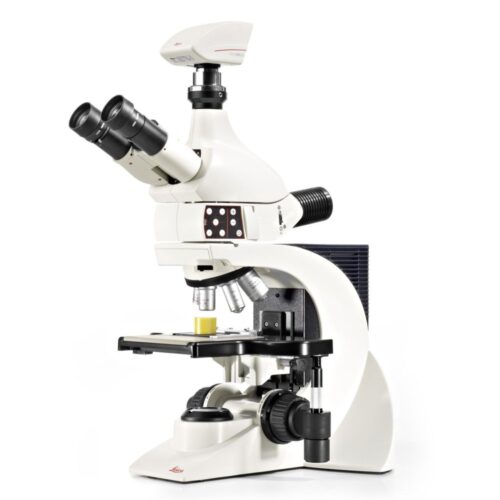 The Leica DM1750 M is a material microscope designed for rapid, accurate analysis results even for a use in rough ambient conditions. Working with the Leica DM1750 M you will see; how simple and reliable microscopy can be. Its robust design contains an excellent optical system and allows the inspection even of larger samples, in brightfield, oblique- or with polarized light. The entire reflected light illumination is carried out with Power-LEDs which allow an inspection with different illumination angles, especially suitable for the detection of micro scratches or for gaining height information.
 -
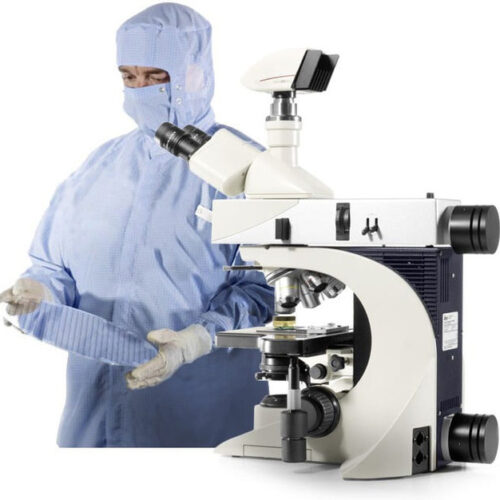 The Leica DM2700 M flexible upright microscope system uses LED illumination for all contrast methods: brightfield (BF), darkfield (DF), differential interference contrast (DIC), qualitative polarization (POL), and fluorescence (FLUO) applications. It also offers built-in oblique illumination, which improves the visualization of surface topography and defects. Optionally, the Leica DM2700 M can also be equipped with a transmitted light axis. The Leica DM2700 M is equipped, e.g. with an N PLAN achromatic objective series with magnifications from 5x to 100x, a field of view of 22 mm, a flattened image field, and large working distances.
 -
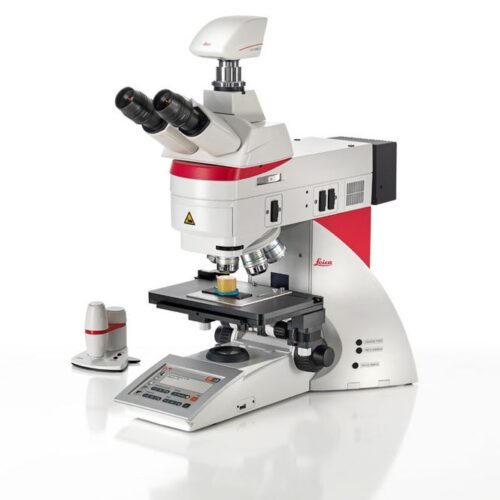 Leica DM4 M and DM6 M digital microscopes for materials science and quality control offer truly reproducible microscopy, incredible optics and high-quality images. Store and recall your imaging conditions with a touch of a button. High quality microscope images make challenging inspection, measurement, and analysis tasks easy. Use the Leica DM4 M for manual routine inspection or the Leica DM6 M for fully automated materials analysis.
 -
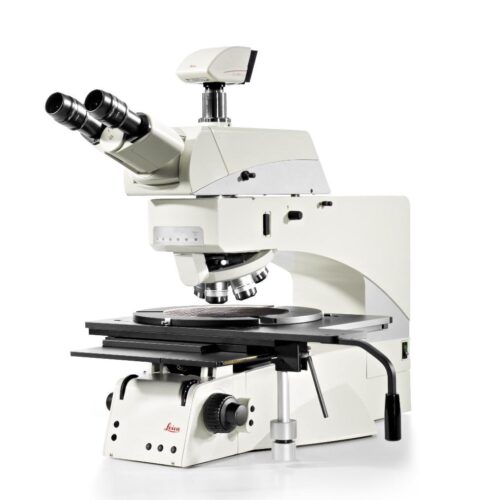 The Leica DM8000 M and Leica DM12000 M optical inspection systems provide an innovative yet cost-effective system solution for mastering present and future inspection challenges with confidence. Inspection, process control and defect analysis of wafers or LCDs and TFTs has to be fast, To detect macro defects, the Leica DM8000 M and DM12000 M have a micro/macro mode for rapid scanning of large components. The macro magnification captures an object field of approximately 40 mm.
 -
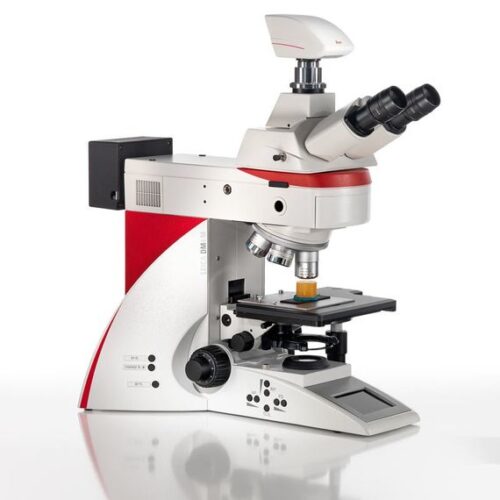 The integrated laser spectroscopy function of the DM6 M LIBS delivers the chemical composition of the microstructure that you see in the microscope image - within a second. Identify the microstructure composition of interest, then trigger the LIBS analysis with a single click. The DM6 M LIBS 2-in-1 solution allows you to perform both structural and elemental/chemical analysis of material phases, e.g., minerals, alloys, ceramics, etc. There is no need for sample preparation nor transfer between 2 or more devices. The entire analysis workflow occurs with a single instrument.